Maya Okonjo
Saturday · Friends
Saturday · Friends
Trail was completely dry this morning. Anyone up for the long loop next weekend?
Rindit is a social network with a messenger attached — and the messenger is the good one. Turn on end-to-end encryption for any conversation, including groups, which most apps cannot do.
Trail was completely dry this morning. Anyone up for the long loop next weekend?
Long loop it is. 7am at the gate?
I'll bring the spare key
Encrypted · only the 14 of you can read this
Not just one-to-one. Your running club, your year group, your games night — the whole conversation, sealed on the devices in it.
When somebody leaves an encrypted group the key changes. They cannot read what is said afterwards. Almost nobody explains this; fewer do it.
The announcements, the group chat and the feed in one place, so the group stops being split across an app for talking and an app for telling.
On your phone
The same account, the same conversations, and the encryption running on the phone itself rather than in a browser tab.
Where it actually is: the app is built and uploaded, and Apple has not reviewed it yet. Testing is by invitation while that happens. There is no Android version and none is being written.
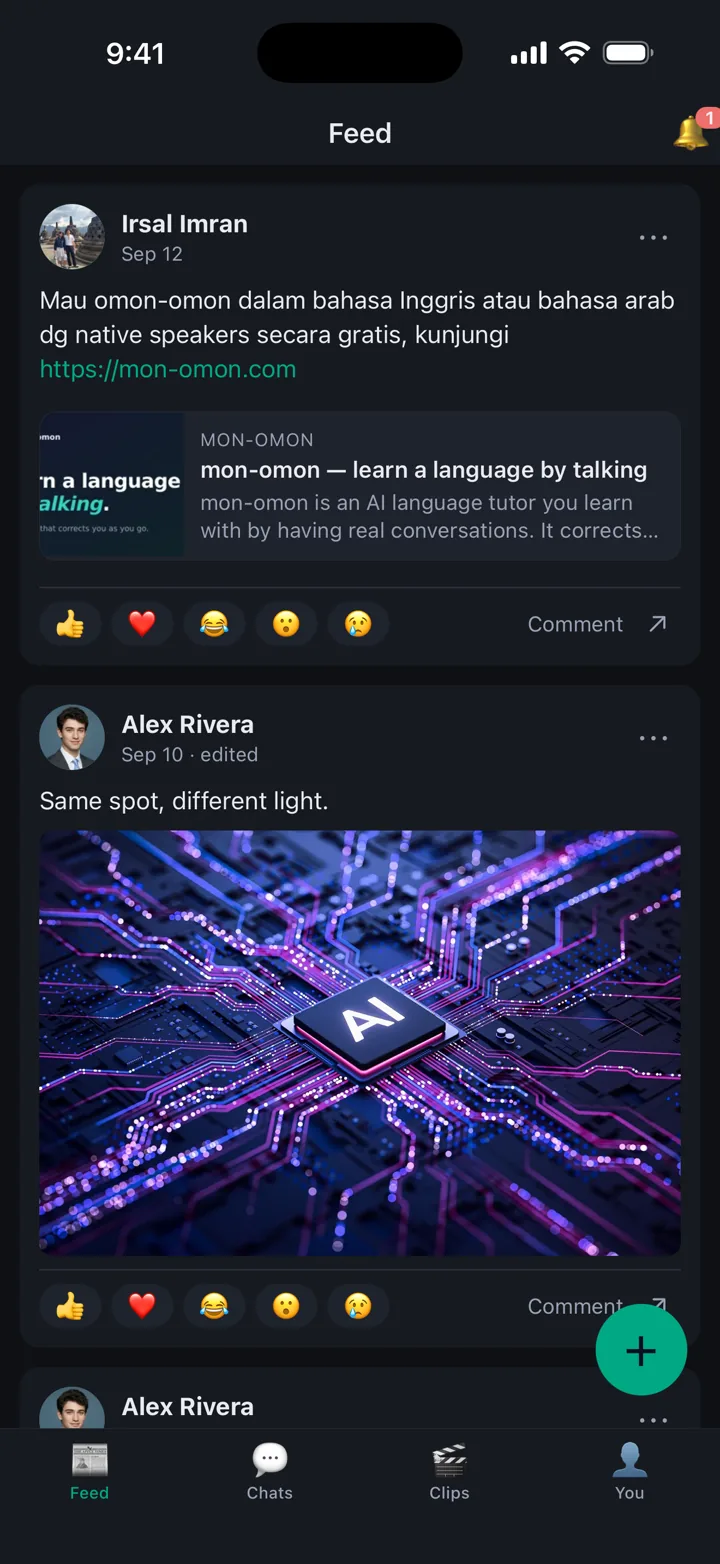
Inside the app
Real screens from the iPhone app.
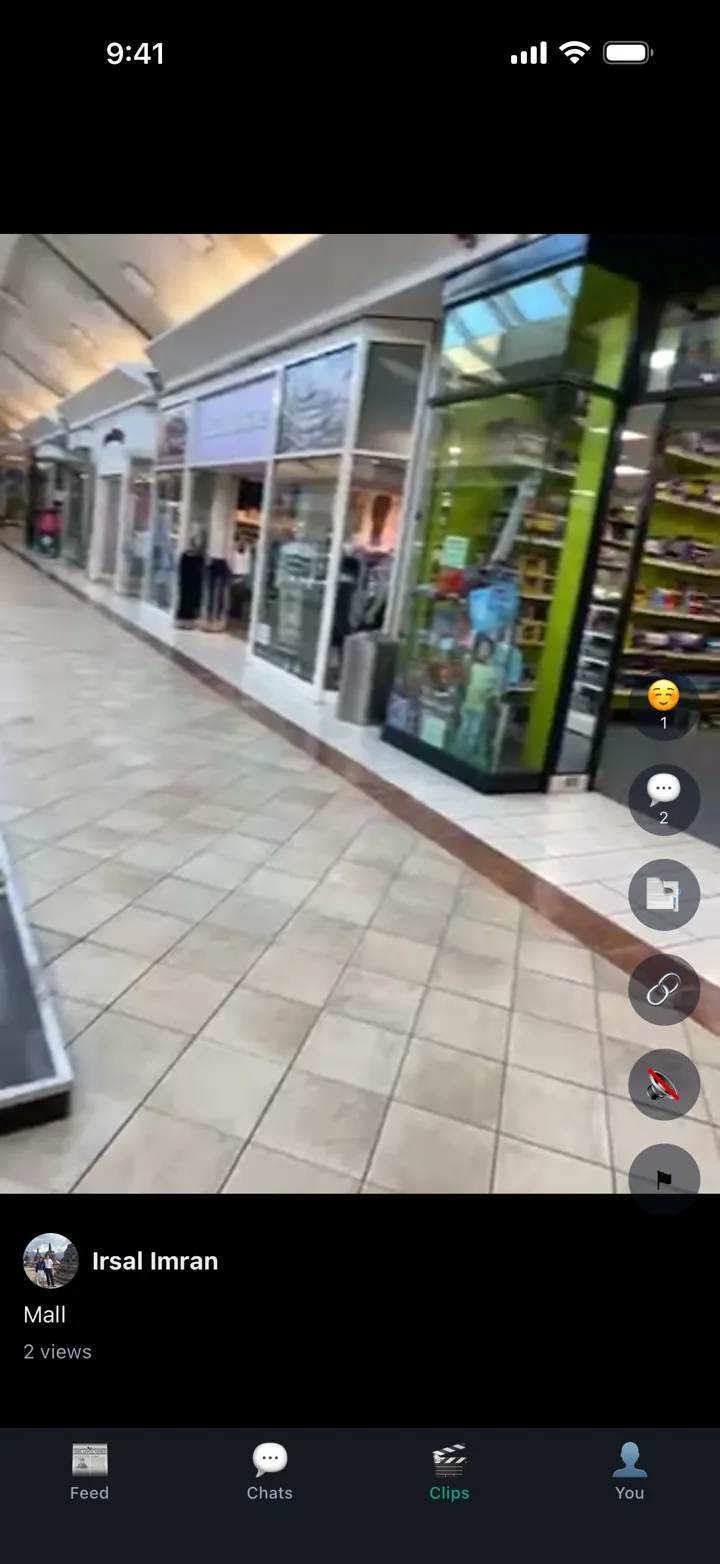
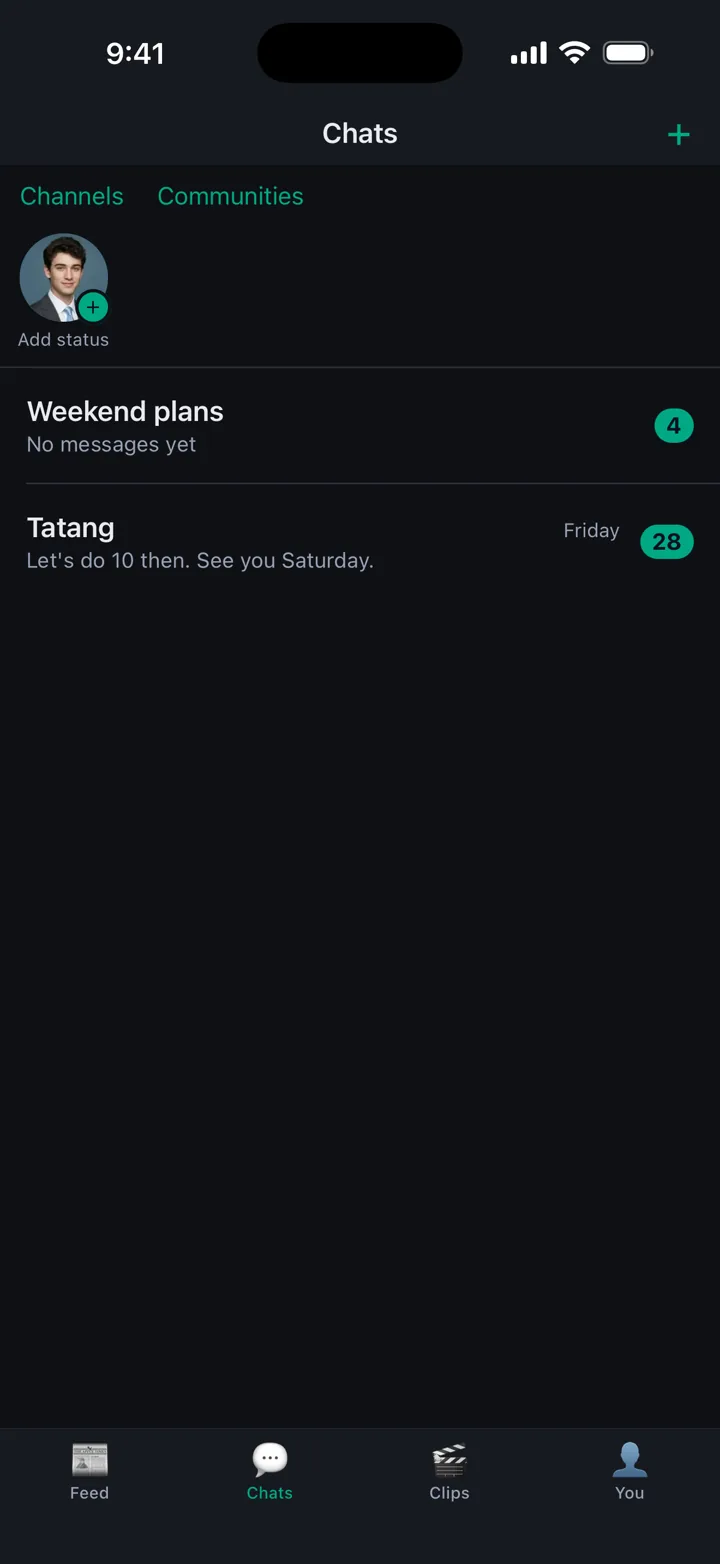
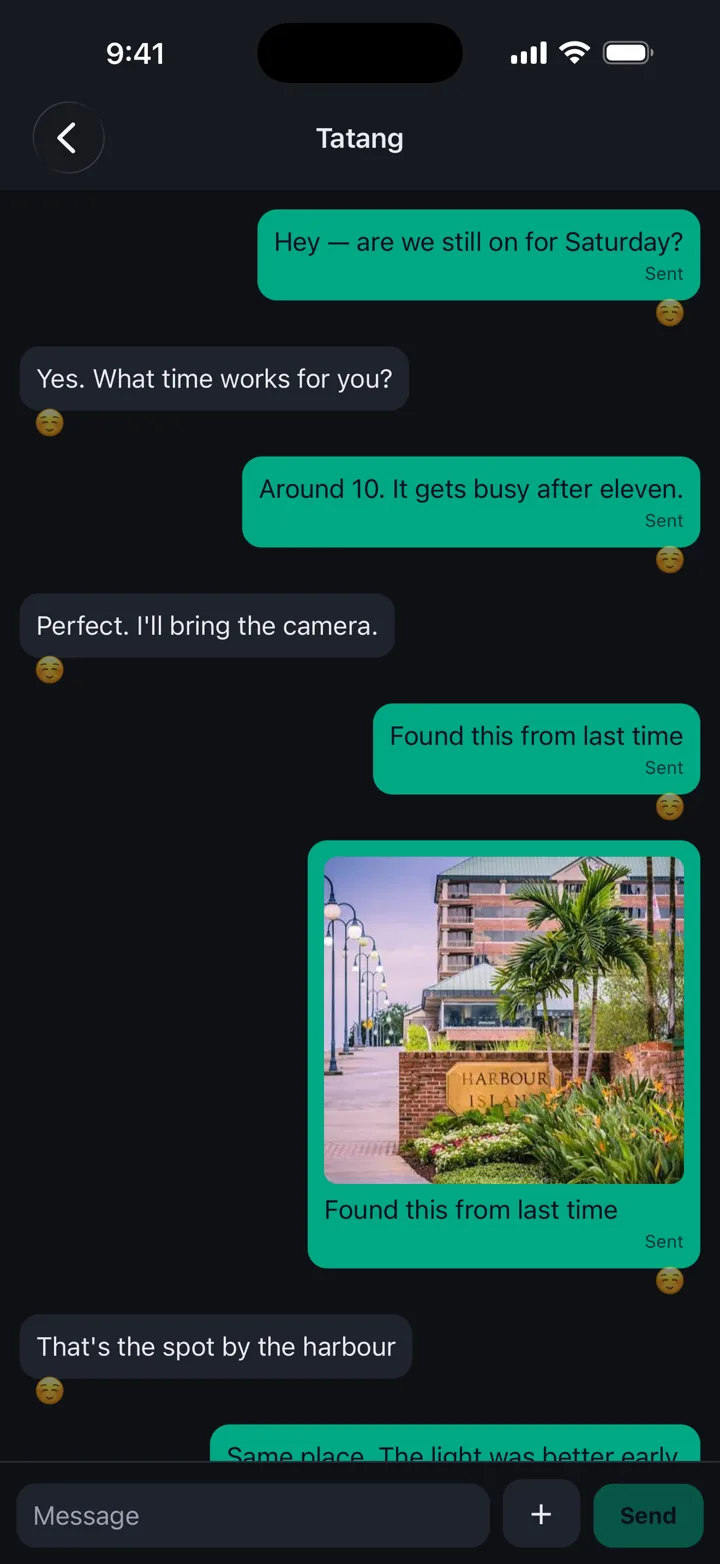
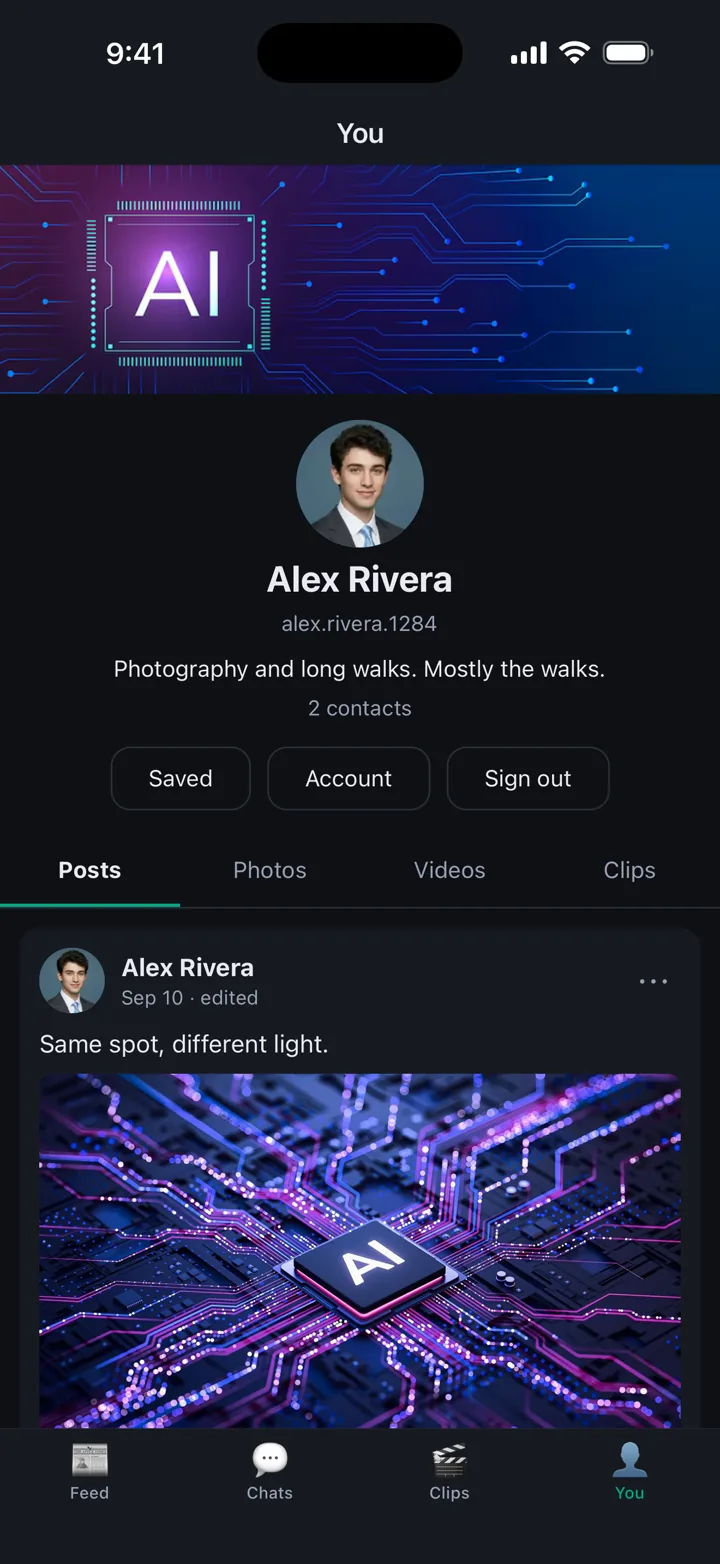
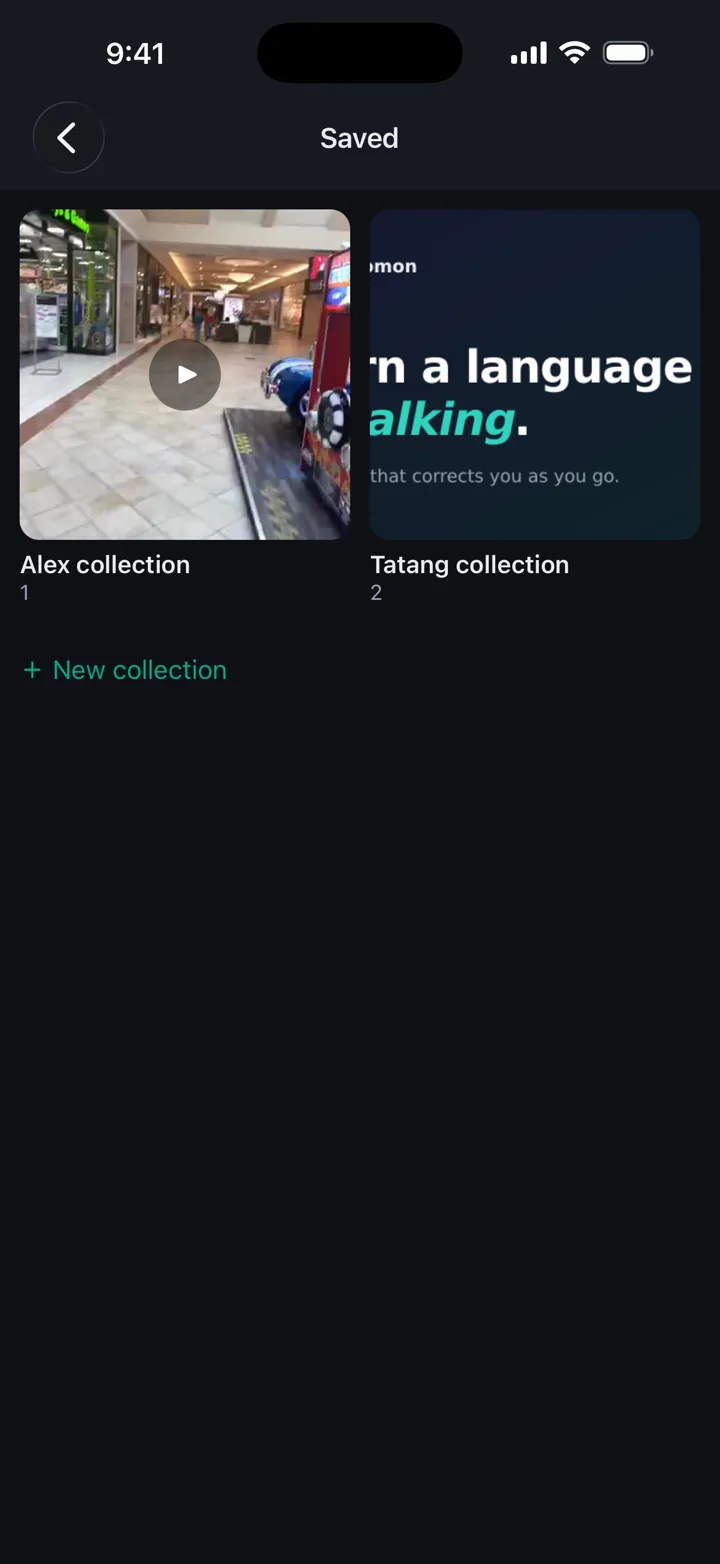
Why it is two things at once
A messenger where the social part is decoration, or a social network with a messenger nobody would pick on its own. The group you actually belong to ends up in two places, and half of it never sees the half that matters.
Rindit is one app because the people are the same people. Your feed is the things that can wait. Your chats are the things that cannot. Nothing has to be posted twice.
What you get
Your timeline is in the order things were posted — nothing ranks it. The clips feed is ranked, because a feed of short video is unwatchable otherwise.
Your feed
Nothing ranks your timeline. What your friends posted appears when they posted it, and the thing you scrolled past yesterday is still where you left it rather than promoted back to the top because you paused on it.
Stories, clips, channels and people you might know sit between the posts as trays you can scroll sideways — and each one can be turned off for good, which means off rather than "show me fewer of these".
What it costs
Every part of it: all the messaging, all the encryption, the whole social side. There is no paid tier, no limit that lifts if you subscribe, and nothing held back to sell you later.
You will see ads. They are never targeted using your messages or who you talk to. Not what you said, not who you said it to, not which groups you are in — none of it reaches the advertising.
Your account
Rindit uses your phone number or your email address, and a passcode we send to it. There is no password to reuse, to leak, or to be phished out of you.
Outside the United States, use an email address. We cannot text every country yet, and we would rather say so here than let you find out at the sign-in screen. An address works anywhere.
A number is worth giving where we can text it, because it is how people who already have you in their contacts find you here. An account with no number works exactly the same and is reached by sharing its link instead.
Two things can go wrong with a number, and both have an answer. Changing carrier or country? Move the account before the old number stops working, and every device stays signed in. Worried somebody could take over your number? Set a registration lock, and the texted passcode alone is no longer enough to claim your account on a new phone.
It is built and it works. What is left is a deployment, and a legal review we would rather do properly than quickly. Leave an address and we will write once, when you can actually sign in.
One email, when it opens. Not a newsletter. Or write to [email protected] — the button opens your mail app, and this is the same address if it does not.